You’ll find that Singapore’s cargo shipping supremacy isn’t accidental—it’s engineered through precise strategic positioning at the world’s busiest shipping corridor. The port handles over 37 million TEUs annually, connecting you to 600 global destinations through optimized logistics networks. Singapore’s regulatory framework cuts your clearance times by 65% compared to regional competitors, while its deep-water terminals accommodate the largest container vessels. But these visible advantages only scratch the surface of what makes this maritime powerhouse truly unstoppable.
Strategic Geographic Location at Critical Maritime Crossroads
Singapore’s position at the confluence of the Strait of Malacca, South China Sea, and Indian Ocean creates an unparalleled maritime advantage for cargo operations. You’ll find this strategic location captures 25% of global traded goods passing through these waters annually. The port sits directly on the world’s second-busiest shipping lane, handling over 100,000 vessel calls yearly. When you’re planning cargo shipping from Singapore, you’re accessing routes that connect 600 ports across 123 countries. This geographic convergence reduces transit times by 2-4 days compared to alternative routes, delivering measurable cost efficiencies for your supply chain operations.
World-Class Port Infrastructure and Advanced Technology Systems
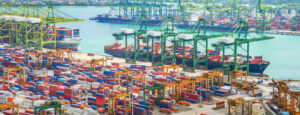
Beyond its geographic advantages, the Port of Singapore operates 67 berths across four main terminals equipped with 200 quayside cranes capable of handling 14,000+ TEU vessels. You’ll find automated guided vehicles (AGVs) moving 40% faster than traditional yard trucks, while predictive analytics reduce vessel turnaround times by 25%. The PORTNET system digitally connects 35,000+ users across your supply chain, processing 13 million electronic transactions annually. Real-time cargo tracking through IoT sensors provides 99.5% shipment visibility. You’re accessing terminals operating 24/7 with 18-meter draft capabilities, supporting ultra-large container vessels that maximize your cargo volumes and reduce per-unit shipping costs significantly.
Business-Friendly Policies and Streamlined Regulatory Framework
Complementing this advanced infrastructure, Singapore’s regulatory environment operates through a single-window clearance system that processes 95% of cargo declarations within 10 minutes. You’ll benefit from the Maritime and Port Authority’s digitized documentation, eliminating paper-based processes that typically delay shipments by 2-3 days. The TradeNet platform integrates 35 regulatory agencies, enabling simultaneous permit applications and approvals. You can access real-time cargo tracking through the Port Operations Control Centre, while automated risk assessment algorithms expedite low-risk shipments. This regulatory efficiency reduces your dwell time to 0.7 days compared to regional averages of 2.1 days, maximizing your supply chain velocity.
Extensive Global Connectivity and Regional Trade Partnerships
While regulatory efficiency establishes Singapore’s operational foundation, the port’s strategic positioning unlocks access to 600 ports across 123 countries through direct shipping routes. You’ll leverage Singapore’s membership in ASEAN Free Trade Area, reducing tariffs across ten Southeast Asian markets representing 650 million consumers. The Comprehensive and Progressive Trans-Pacific Partnership (CPTPP) extends your reach to Pacific Rim economies, while bilateral trade agreements with China, India, and Australia eliminate additional barriers. Singapore’s hub-and-spoke network design enables transshipment to secondary ports within 72 hours, connecting you to emerging markets in Myanmar, Cambodia, and Laos that lack direct international shipping capabilities.